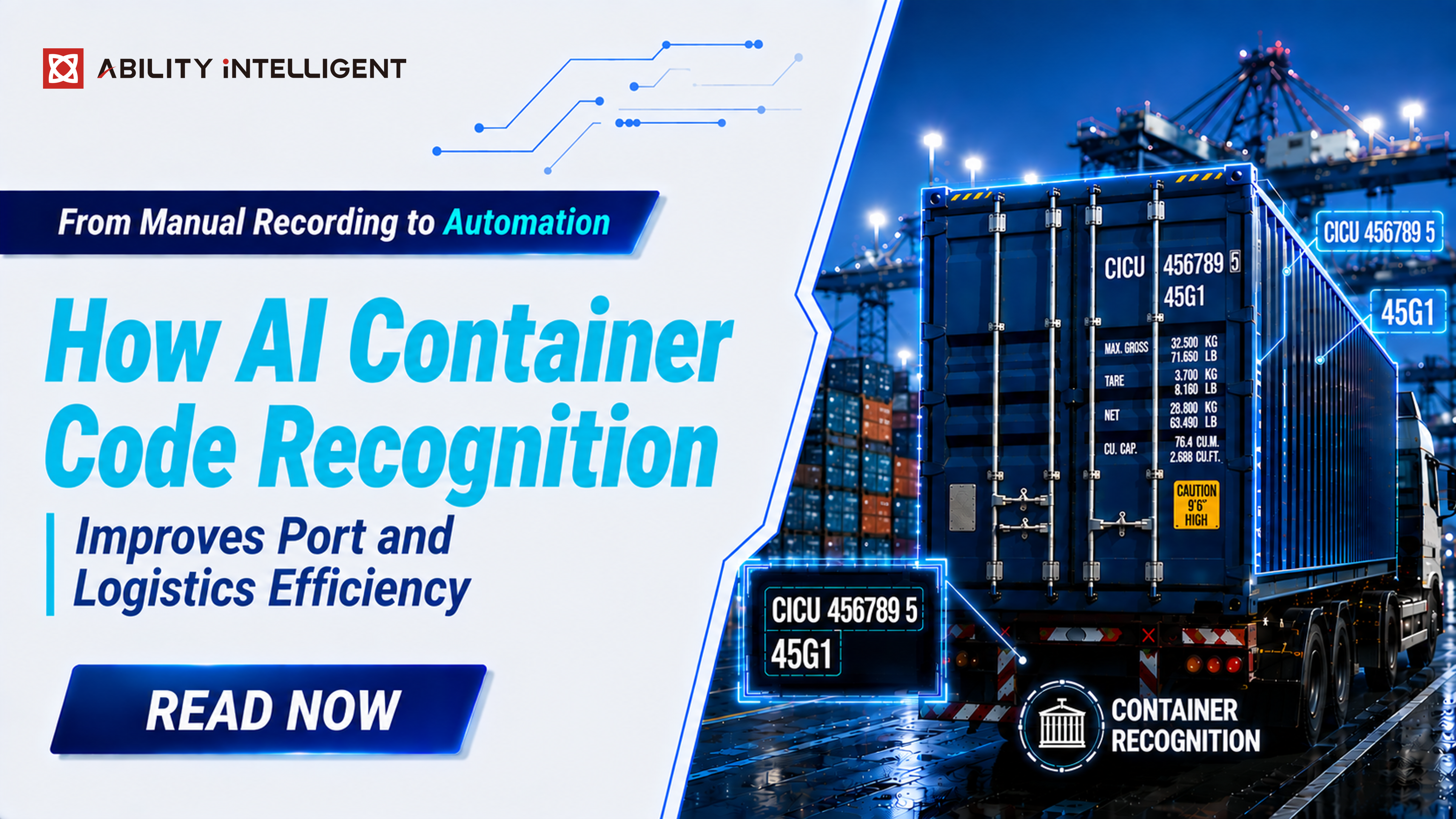
In ports, logistics parks, and warehouses, container handling involves large volumes of identification and data entry. Manual code checking and recording can increase operational workload and affect process efficiency. Ability Intelligent’s Container Code Recognition (CCR) system combines specialized cameras, dedicated lighting, OCR, and AI-driven computer vision to automatically capture container images and recognize container codes. It can also identify container dimensions and types, converting images into structured data for backend systems.
Why CCR? Automating Container Code Recognition
CCR stands for Container Code Recognition. Using computer vision and AI, the system automatically locates container code areas and applies OCR to read container identification codes and convert them into structured data. Recognition results are converted into structured data and integrated into backend processes, helping reduce manual verification and data entry.
How AI + OCR Automate Container Recognition
Automated container recognition combines image capture, code localization, OCR, and AI processing to convert images into structured data.
① Image Capture: Capture Container Data Automatically
Specialized cameras and dedicated lighting capture the images required for AI recognition.
② Code Localization: Locate Container Codes
AI automatically locates the container code area before text recognition.
③ OCR Recognition: Turn Images into Data
OCR reads container identification codes and converts them into structured data.
④ Edge AI: Process Data at the Edge
Edge AI performs real-time inference on the camera side, reducing server load and accelerating recognition before transmitting structured data to backend systems.
Beyond Container Codes: Dimensions, Types, and More
CCR goes beyond container code recognition and can provide additional container information based on operational needs.
Container Code Recognition: Automatically locates and recognizes container codes across different standards and formats.
Container Dimension Recognition: Identifies container dimensions to support transportation and warehouse management.
Container Type Recognition: Identifies standard, refrigerated, open-top, and other container types.
Abnormal Event Detection: Detects container damage, unauthorized movement, and improper stacking, with real-time alerts for management.
4 Ways AI Container Recognition Supports Operations
As container volumes increase, manual verification and data entry can add operational workload. CCR can help streamline container management in four key areas:
1. Reduce Manual Operations: Automatically recognize container codes to reduce manual verification and registration.
2. Reduce Manual Data Entry: Convert recognition results into structured data to reduce manual data entry.
3. Support Container Registration and Tracking: Send recognition results to backend systems to support container tracking and dispatching.
4. Support Container Management: Integrate recognition data with backend systems and vehicle access or GPS information to support container tracking and management.
Where Container Recognition Makes an Impact
CCR can be deployed across ports, logistics, warehousing, and transportation based on operational needs.
Port Management:
Recognize containers entering and leaving ports to support loading, unloading, and dispatching operations.
Logistics Parks:
Automate container registration and tracking while reducing manual operations.
Warehouses:
Use container dimension and type recognition to support zoning and stacking management.
Transportation Tracking:
Integrate with vehicle access control and GPS systems to support complete container route tracking.
Security Monitoring:
Detect abnormal containers or unauthorized movements and provide real-time alerts to strengthen site management.
From AI Recognition to Logistics Integration
The value of AI container recognition goes beyond image recognition. It also integrates recognition results into existing workflows. CCR supports centralized and distributed architectures. Structured recognition data can be sent to backend systems and integrated with WMS, TMS, ERP, and gate control systems to support container entry, exit, dispatching, and logistics management.
What to Consider Before Implementing CCR
Before implementation, companies should review recognition requirements, site conditions, and system integration needs. Key considerations include camera locations, viewing angles, and lighting conditions. Existing WMS, TMS, ERP, and gate control systems should also be reviewed for integration needs. Additional cameras, detection points, and functional modules can be added as operational needs evolve. Ability Intelligent’s CCR supports flexible deployment, scalable operations, and remote AI model updates for long-term system operation.
From Container Recognition to Smarter Logistics
Automated container recognition goes beyond replacing manual recording. It converts on-site images into structured logistics data that can be managed and integrated across systems. With CCR, container codes, dimensions, types, and entry and exit information can be digitized and integrated with WMS, TMS, ERP, and gate control systems. For ports, logistics parks, and warehouses, AI image recognition helps connect on-site operations with backend management and support more efficient container management.

Want to learn more about AI Container Recognition, Smart Logistics, and AI Image Recognition applications?
Follow Ability Intelligent on Facebook for the latest industry insights and updates.
