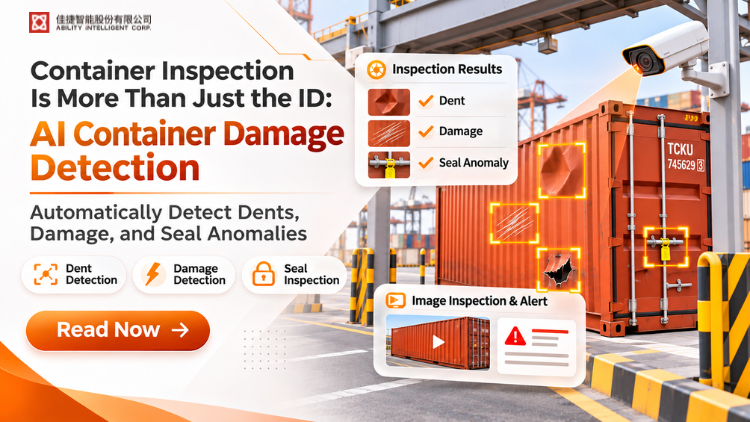
Large volumes of shipping containers move through ports, logistics centers, and container yards every day. Beyond verifying container numbers, sizes, and types, checking for dents, cracks, holes, and seal anomalies is equally important for liability verification, maintenance planning, cargo security, and container handover management.
Traditional container inspections generally require personnel to visually examine each container for damage and document the findings through photographs, written records, or manual data entry. However, container surfaces may develop scratches, corrosion, and deformation after prolonged transportation, while assessments of damage severity can vary between inspectors. As container traffic increases, these inspections become more time-consuming, adding to the workload involved in recording, comparing, and tracking inspection results.
AI-powered Container Damage Detection (CDD) uses high-resolution imaging and deep learning technology to automatically analyze visible abnormalities on container surfaces, transforming information previously collected through manual visual inspections into structured data that can be classified, recorded, and retrieved. From damage locations and surface changes to seal conditions, this information can be incorporated into a more systematic container inspection and management process.
What Is the Difference Between Container Code Recognition and Container Damage Detection?
Container Code Recognition (CCR) and Container Damage Detection (CDD) both use AI-based image recognition technology, but they address different operational requirements.
CCR primarily identifies container numbers, sizes, and types, helping systems verify container identities and establish records for gate operations and logistics management. CDD focuses on inspecting the physical condition of containers, identifying visible abnormalities such as dents, deformation, structural damage, and other surface defects.
For example, when a container passes through a port gate, the system can capture its identification number while conducting damage detection to determine whether visible abnormalities are present. This allows management personnel to understand not only which container is being inspected, but also its current external condition.
Ability Intelligent's CDD system can use Optical Character Recognition (OCR) to read container numbers and relevant markings, linking identification information with damage inspection results. This enables container identity and external condition records to be used within the same management workflow.
How Does AI Identify Damage from Container Images?
The core of Container Damage Detection lies in using computer vision and deep learning models to analyze container surface images and identify different types of visible abnormalities.
When a container enters the inspection area, imaging equipment captures its exterior. The system then analyzes the visible surfaces to locate potential dents, scratches, cracks, or other defects and classifies them according to their characteristics.
Common inspection categories include:
-
- Dents and Deformation: Identifying surface dents, bending, and abnormal structural contours while recording damage locations and severity.
- Scratches and Structural Damage: Detecting surface scratches, cracks, and holes to help personnel assess the container's external condition.
- Stains and Corrosion: Analyzing surface contamination, rust, and corrosion patterns as references for further inspection and maintenance.
- Seal Anomalies: Examining visible seal conditions and signs of irregularities to help determine whether additional inspection is required.
The system can also classify abnormalities according to damage type, location, and severity level, helping organizations prioritize inspections and determine appropriate follow-up actions. Compared with simply storing photographs of containers, structured inspection information makes subsequent retrieval, comparison, and management more efficient.
However, AI-based visual inspection remains subject to camera angles, visual obstructions, and image quality. Detection performance should therefore be validated under actual operating conditions, with manual reinspection conducted when necessary.
Why Do Container Seal Anomalies Require Separate Inspection?
External container damage is commonly associated with transportation, cargo handling, or prolonged use, while seal anomalies involve a different set of management and security concerns.Container seals are an important inspection element during transportation and handover procedures. When a seal shows visible signs of damage, replacement, or other suspicious conditions, management personnel may need to verify the container's status and review the relevant handover records.
AI Container Damage Detection can analyze visible seal conditions captured by cameras, helping identify potential integrity issues or signs of tampering while incorporating the corresponding images into inspection records.For example, if a seal anomaly is detected when a container enters a facility, the system can generate an alert for personnel to review the available footage and arrange further inspection according to established operating procedures.
It is important to recognize that image analysis provides findings based on visible conditions. A single image cannot independently confirm whether a container has been opened without authorization, nor can it replace necessary physical inspections and security procedures.The practical value of seal anomaly detection therefore lies in helping personnel identify containers requiring additional attention and preserving visual evidence for subsequent review.
How Can Historical Image Comparison Identify Changes in Container Damage?
For port and logistics operators, detecting damage is only the first step. Management personnel often need to determine whether the damage already existed during a previous inspection or whether the container's condition has changed.When each inspection is documented through separate paper forms or photographs, personnel may spend considerable time locating previous records and manually comparing images captured at different points in time.
AI Container Damage Detection can compare current inspection images with existing historical records to help identify newly detected damage or changes in external appearance.For example, a container may have had surface scratches during an earlier inspection but show an additional dent when it returns to the facility. By comparing images from different inspection periods, the system can provide information to support further assessment.
Historical records also help personnel organize damage locations, categories, and changes over time, providing useful references for maintenance planning, handover verification, or the preparation of insurance claim documentation.Historical comparisons can also help determine whether damage conditions are recurring, worsening, or newly introduced during a specific stage of transportation. This additional context can help operators prioritize inspections, evaluate maintenance requirements, and support asset management decisions.
However, image comparison results do not automatically establish responsibility for damage. Actual liability assessments must also consider handover timelines, transportation records, and relevant inspection procedures.
From Damage Detection to Alerts: How Does Inspection Data Support Management Workflows?
After the system completes its analysis of a container's external condition, inspection results must be properly recorded and utilized to deliver meaningful operational benefits.A CDD system can generate inspection information based on damage types and severity, issue alerts for abnormal or potentially high-risk conditions, and retain associated images, damage locations, and inspection records for subsequent verification and tracking.
For example, if a container is found to have a significant hole before entering a storage facility, management personnel can review the corresponding inspection images and determine whether additional inspection, maintenance assessment, or other actions are required under existing operating procedures.
For facilities handling large container volumes, this approach allows inspection information to be transformed from individual photographs or manual records into structured data that can be continuously accumulated and retrieved.
Depending on project requirements, damage inspection results can also be integrated with Port Management Systems (PMS), Warehouse Management Systems (WMS), or logistics tracking platforms, allowing container condition data to connect with existing operational workflows.
What Site Conditions Should Be Considered for Automated Container Damage Inspection?
Ports and logistics facilities operate in complex environments, where containers may be inspected under varying lighting, weather, and vehicle movement conditions. The method used to capture images can therefore directly influence subsequent detection performance.
For example, identifying a large dent on the side of a container and detecting an anomaly near a door seal may require different camera positions and levels of image detail. If parts of the container are obscured by vehicles, equipment, or other containers, the system cannot fully assess surfaces that have not been captured.
Before implementation, operators should evaluate several practical requirements:
-
- Inspection Coverage: Determine whether the system needs to inspect container sides, end panels, doors, or other designated areas.
- Image Acquisition Conditions: Assess whether camera angles, resolution, lighting, and container movement conditions meet detection requirements.
- Damage Categories: Define which types of abnormalities need to be identified and which conditions should trigger alerts.
- Historical Records: Determine whether inspection images must be retained, damage changes compared over time, and inspection reports generated.
- System Integration: Evaluate whether inspection results need to be incorporated into existing port, warehouse, or logistics management systems.
System planning should align inspection equipment with actual facility operations rather than relying solely on the number of cameras or available AI functions as evaluation criteria.
Turning Container Inspections into Traceable Management Data
Container inspections involve more than identification numbers. External conditions, seal integrity, and damage records are equally important. When these tasks depend entirely on manual visual inspections and data entry, maintaining and comparing results across different inspection periods becomes increasingly challenging.
With AI Container Damage Detection, ports and logistics facilities can convert visible abnormalities, including dents, deformation, structural damage, corrosion, and seal irregularities, into organized inspection records. Damage classification, abnormality alerts, and historical image comparison further support a more systematic approach to monitoring container conditions.
As inspection data accumulates, management teams can more easily retrieve a container's damage history, compare changes in its external condition over time, and provide relevant information for subsequent inspections, maintenance, and logistics management processes.
The objective of automated container damage inspection is not to eliminate human judgment entirely, but to reduce repetitive visual inspection and data management tasks. By enabling personnel to verify abnormalities more efficiently, track changes, and maintain comprehensive condition records, AI-powered inspection can support more consistent and traceable container management operations.
Ultimately, this enables ports, logistics operators, and container depots to improve inspection consistency, strengthen traceability, reduce processing time, and make more informed operational decisions. By transforming container condition assessments from isolated visual checks into continuously managed inspection data, organizations can establish a more efficient, auditable, and scalable approach to container management.

Want to learn more about Smart Buildings, AI Video Analytics, and AIoT applications?
Follow Ability Intelligent on Facebook for the latest industry insights and updates.
